Tuesday, October 27, 2026

SCUBA News - #315 - October 2026

SCUBA News

~~~~~~~~~~~~~~~~~~~~~~~~~~~~~
SCUBA News (ISSN 1476-8011)
Issue 315 - October 2026
https://www.scubatravel.co.uk
~~~~~~~~~~~~~~~~~~~~~~~~~~~~~~

Welcome back lovely divers. Today, the world's 10 best wreck dives as voted for by our readers; dramatic encounters in South Africa; our creature of the month is the fascinating pulsating Xenia coral; hand-picked liveaboard deals to get you in the water for less and, as always, our run down of all the diving and marine conservation news.


What's New at SCUBA Travel?

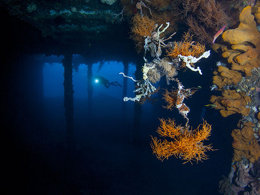
Liberty shipwreck

World's Best Wreck Dives

Discover the best wreck dives in the world, as voted for by real SCUBA divers (never AI!).
READ & VOTE NOW

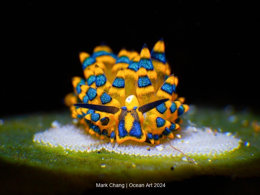
Nudibranch with eggs, Mark Chang

Enter Now - Underwater Art Photography Contest Open

With more 90 prizes available to underwater photographers around the world, the Ocean Art Underwater Photo Competition is accepting entries from now until 6 December. What are you waiting for?
SEE PREVIOUS WINNERS

Liveaboard Deals and Destinations

Save up to 50% with our hand-picked offers.

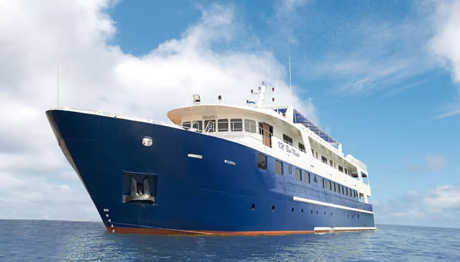
  1. Blue Horizon, Egypt. SAVE 35%. Explore the northern Red Sea's wrecks and reefs on a 7-night trip from Hurghada, departing January to April 2027. Price from £622 per person.
  2. Blue Horizon, Egypt

    Red Sea Wrecks and Reefs

  3. Mari, Indonesia. SAVE UP TO 20%. Explore Raja Ampat and Misool in small dive groups, with a maximum of four divers per guide. Depart 3 December 2026 for 10 nights with 15% off, from US$3,700, or 16 December 2026 for 11 nights with 20% off, from US$3,830.
  4. Mari, Indonesia

    More Info or Book

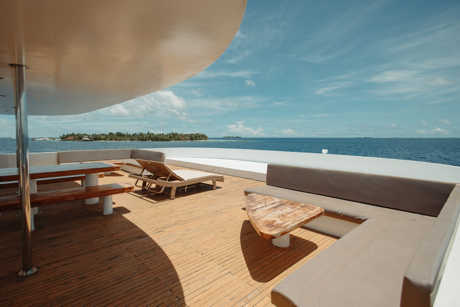
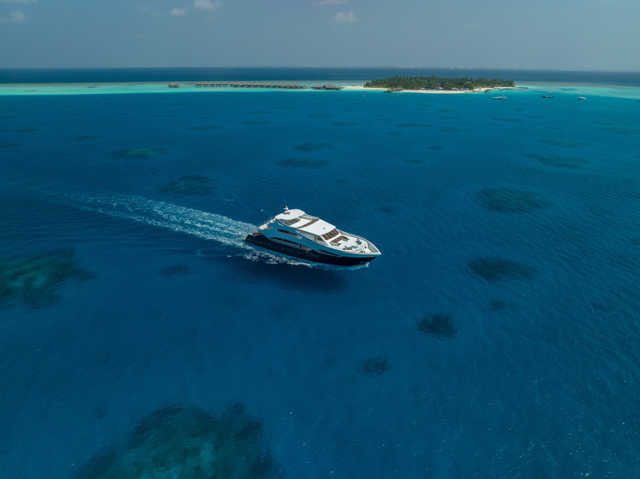
  5. Adora, Maldives. SAVE 30%. Selected 7-night trips departing 29 November, 6 December and 13 December 2026, from US$2,053 per person. Non-divers can join for snorkelling, with island and sandbank visits between dives. Children are welcome.
  6. Adora, Maldives: Save 30%

    30% OFF!

  7. Oceania, Papua New Guinea. SAVE 50%. A 16-guest catamaran exploring the reefs of West New Britain. Depart 13 November 2026 for 8 nights, from US$4,990 US$2,495 per person.
  8. HALF PRICE

    50% OFF!

  9. Felicity, Maldives. SAVE 50%. Selected 7-night trips departing July and August 2027, from US$3,660 US$1,830 per person. The 18 July itinerary visits Baa Atoll, Ari and Vaavu.
  10. Felicity, Maldives

    Maldives at Half Price

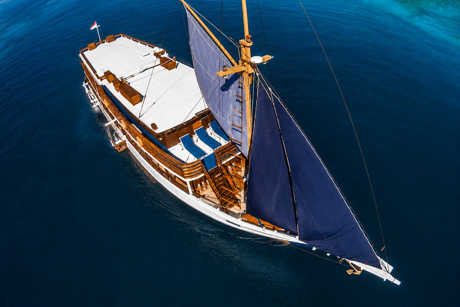
  11. The Junk, Thailand. SAVE 20% in 2026. A traditional teak sailing boat visiting the Similan and Surin Islands, including Richelieu Rock. Four-night trips from £667 per person.
  12. The Junk, Thailand

    Explore the Andaman Sea

  13. Galaxy Diver III, Galapagos. SAVE 32%. A 7-night Galapagos diving trip departing 27 January 2027, from US$7,000 US$4,770 per person. An option for experienced divers planning to explore the islands.
  14. Galaxy Diver III, Galapagos

    Galapagos for Less

  15. Sea Bird / Sea Star, Seychelles. SAVE 30%. Combine snorkelling, island visits and optional diving on a 7-night cruise departing January, February or March 2027, from US$1,688 per person. Full board and snorkelling equipment are included; diving is charged separately.
  16. Sea Bird / Sea Star, Seychelles

    Discover the Seychelles

  17. Blue Manta, Indonesia. SAVE 20%. Travel from Raja Ampat through the Banda Sea to Ambon, departing 16 April 2027 for 9 nights. Price from US$5,800 US$4,640 per person. Dedicated camera facilities make this a useful option for underwater photographers.
  18. Blue Manta, Indonesia

    Raja Ampat, Banda and Ambon

  19. Caribbean Explorer II, Saba and St. Kitts. SAVE UP TO 27%. Explore Caribbean reefs, walls and wrecks on a 7-night holiday. Depart 19 December 2026 with 27% off, from US$2,195, or 26 December 2026 with 20% off, from US$2,396 per person.
  20. Caribbean Explorer II, Saba and St. Kitts

    Christmas in the Caribbean

See more liveaboard deals to some of the best diving in the world - Micronesia, Philippines, Galapagos, Indonesia, Socorro, Cocos Islands...


Mystery of the Pulsating Soft Coral

If you've dived in the Red Sea or Indo-Pacific you will have seen a type of soft coral repetitively "grabbing" at the water. They are so common that we take them for granted. But only one family of coral does this - the Xeniidae. Even within this family, only a few members pulsate

.
Pulsating Xenia coral
Umberella xenia, Xenia umbellata, Red Sea. Jill Studholme

Scientists have long assumed that these Xenids rhythmically pulsate to create a current to assist feeding and respiration. This is a very costly strategy, though, in terms of energy used. Until now it wasn't known exactly how much, and exactly what, benefit the coral gets from working this hard.

Mystery solved after 200 years

The elegant motion of Xenids has been fascinating the scientific society for over 200 years. The first Xeniidae colonies were collected during Napoleon's invasion of Egypt during the years 1798-1799 when specimens of Xenia umbellata were brought back to Europe.

Pulsating Xenia coral
Umberella xenia. Deposit Photos

Researchers have now found that, surprisingly, these soft corals are the most efficient of any so far measured.

After watching several coral colonies with an underwater infrared-sensitive camera night and day, the researchers made a surprising discovery: Heteroxenia corals cease to pulsate and take a half-hour break every single day in the afternoon. As yet, they can't explain the afternoon siestas.

Volunteer divers helped with the investigation. They found that if a diver lightly touched the coral, the polyps "close" and remain motionless for a few minutes, after which the coral returns to its normal pulsation activity. The researchers used this behaviour in order to repeatedly measure the flow field around the Heteroxenia during pulsation and rest.

Increased Photosynthesis

Corals host photosynthetic algae in their tissues. The symbiotic algae provides the coral with essential nutrients and lives off the waste of the coral. The researcher's found that the pulsation motions enhance the coral's photosynthesis rate.
Pulsating Xenia coral
Umberella xenia, Xenia umbellata. Jill Studholme

The photosynthesis measurements led to the scientists next discovery. Analysis of the direction of water flow indicated that the motion of the polyps effectively sweeps water up and away from the coral tissues into the ambient water. Corals need carbon-dioxide during daytime and oxygen during nighttime, as well as nutrients like phosphate and nitrogen during day and night. One of the challenges for coral colonies is to render their surrounding waters rich in their essentials by efficiently mixing the water around them.
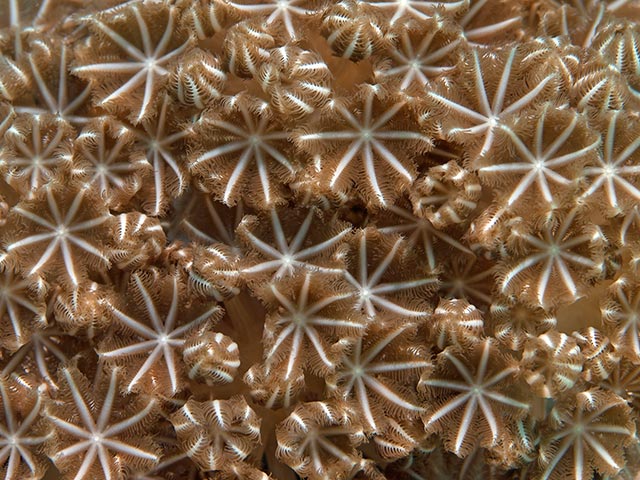
Heteroxenia fuscescens. Orlandin/DepositPhotos

Even though the polyps' motions are uncoordinated - each polyp staring its grabbing at a different time - the accumulated effect of the polyps' activity is a significant enhancement of the water flow around the colony, particularly sweeping water away from the coral and reducing the probability of re-filtration of the same water.

Without water motion, the oxygen concentration in the coral tissues would rise and the photosynthesis rate would drop.

Corals, Currents and Resilience in Adversity

Most hard corals feed more in faster flowing water. But not this soft coral. Water flow has no effect. However, if there is less food in the surrounding water then they pulse more slowly.

Xenia are resistant to bleaching and able to cope with higher sea temperature. They are also invulnerable to excess nutrients and organic matter caused by run-off.

Will we be seeing more Xenia at the expense of other corals in the future?

Sources and References

Nadir, Elinor et al. (2025). Diffuse pacemaker mechanism with distinctive organization drives pulsation in the octocoral Xenia umbellata. Proceedings of the National Academy of Sciences. 122. 10.1073/pnas.2500611122.
Coral Guide Red Sea by Lieske and Myers, 2004.
Proceedings of the 12th International Coral Reef Symposium, Cairns, Australia, 9-13 July 2012. Synopsis of the Family Xeniidae (Cnidaria: Octocorallia): Status and Trends. Michael P. Janes, Anita G. Mary
Hill, C. E. L. et al. (2023). Physiology of the widespread pulsating soft coral Xenia umbellata is affected by food sources, but not by water flow. Ecology and Evolution, 13, e10483. https://doi.org/10.1002/ece3.10483

Cnidaria > Anthozoa > Octocorallia > Malacalcyonacea > Xeniidae > Xeniua > Xenia umbellata


Diving news from around the World

Razorbill

Googly-eyed buoys and kites help keep seabirds out of fishing nets, study finds
Nets fitted with bird-of-prey kites had 71% lower odds of catching guillemots and razorbills, and nets with spinning "looming-eye buoys" 59% lower odds.

Scuba diver. Cptn Victor Orgon.

Sustainable Scuba Diving Tourism Supply Chain Plan
Evidence shows that healthier reefs increase diver demand, pricing potential and willingness to pay. Environmentally certified dive operators are associated with lower levels of reef damage.

Plankton

Something is happening to the fish's food
Fish may be getting not only less food, but food of lower quality

Coral reef conservation in Indonesia

Combining science and community knowledge helps coral reef conservation
The reefs of the Spermonde Archipelago, coral biodiversity hotspot in Indonesia, face increasing pressure from pollution, destructive fishing, coastal development and other human activities.

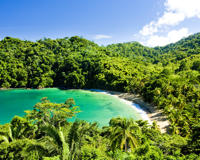
Tobago trees provide shade and help protect the beach from coastal erosion, and their removal would harm one of Tobago's most important turtle nesting sites.

Tourism expansion v turtle nests: the dispute dividing communities in one Tobago resort
Plans for a 200-room project on an unspoiled beach have pitted developers against the conservationists fighting for smaller-scale schemes to protect the island's habitat

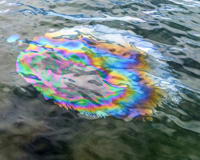
Oil slick

Oil pollution is drifting into marine protected areas
Oil slicks from vessels and offshore oil operations repeatedly drifted into marine protected areas around the world between 2022 and 2025

Bluefin tuna

Comebacks for tuna and turtles prove nature loss can be reversed
A landmark report reveals that the world must change the way it produces food to avoid a biodiversity collapse

Fish over coral reef

Healthy reef sounds can boost coral and fish recovery efforts
Playback of sounds from healthy reefs can help spur the recovery of degraded coral reefs and their fish communities.

Greenland Shark, Somniosus microcephalus, Hemming CC-BY-SA

Plan to cull Greenland sharks which only reproduce after 150 years
Greenland sharks can live for more than 400 years but as they only reproduce after 150 years, plans for a cull could devastate the population, say conservationists.

Sharks can hear and locate sounds 250 feet away

Sharks can hear and locate sounds 250 feet away
Sound travels through the ocean carrying clues about potential prey, predators and other animals, giving sharks an important way to detect what they cannot yet see.

Survival of Coral Cookies in Zanzibar

Survival of Coral Cookies in Zanzibar
What's a coral cookie? It's a fragment of coral attached to a concrete substrate to be planted out in the ocean. But how well do they survive?


SCUBA News is licensed under a Creative Commons Attribution 4.0 Unported License. This means we are happy for you to reuse our material for both commercial and non-commercial use as long as you: credit the name of the author, link back to the SCUBA Travel website and say if you have made any changes. Most photos though, are copyright the photographer. Please get in touch for details.

Photo credits: Tim Nicholson; Jill Studholme; Cptn Victor Orgon; Hemming/CC BY-NC 4.0;--> /DepositPhotos; divebooker.com

UNSUBSCRIBING
Visit https://c.emailsend20.co.uk/profile/S-61731@J7sllRUwYQNkRwrI93C6yQ4F0xqxNQi6gZV3_N2Z6zU.@1 to remove yourself from the mailing list. Any problems contact news@scubatravel.co.uk.

ADVERTISING
Should you wish to advertise in SCUBA News, please see the special offers at
https://www.scubatravel.co.uk/newsad.html
Other advertising opportunities are at
https://www.scubatravel.co.uk/diving-advertising.html

CONTACTING THE EDITOR
Please send your letters or press releases to:
Jill Studholme
SCUBA News
The Cliff
DE6 2HR
UK
news@scubatravel.co.uk

open

No comments:

Post a Comment